EquineTest
01M6DYM0P76G1DWJ2Y7FDPCQ40-v1
  • Horses
  • Performance

4. 11. 2026

Genes behind Performance - MSTN, PDK4, COX4I2

Selecting horses based on their performance is one of the fundamental principles of breeding, and while it’s historically mainly based on performance results and observations, today, science allows us to also take a glimpse into the genetic background. However, genetics is only one of the many puzzle pieces that’s needed to make a great performance horse – as the saying goes, breed the best to the best, and hope for the best!

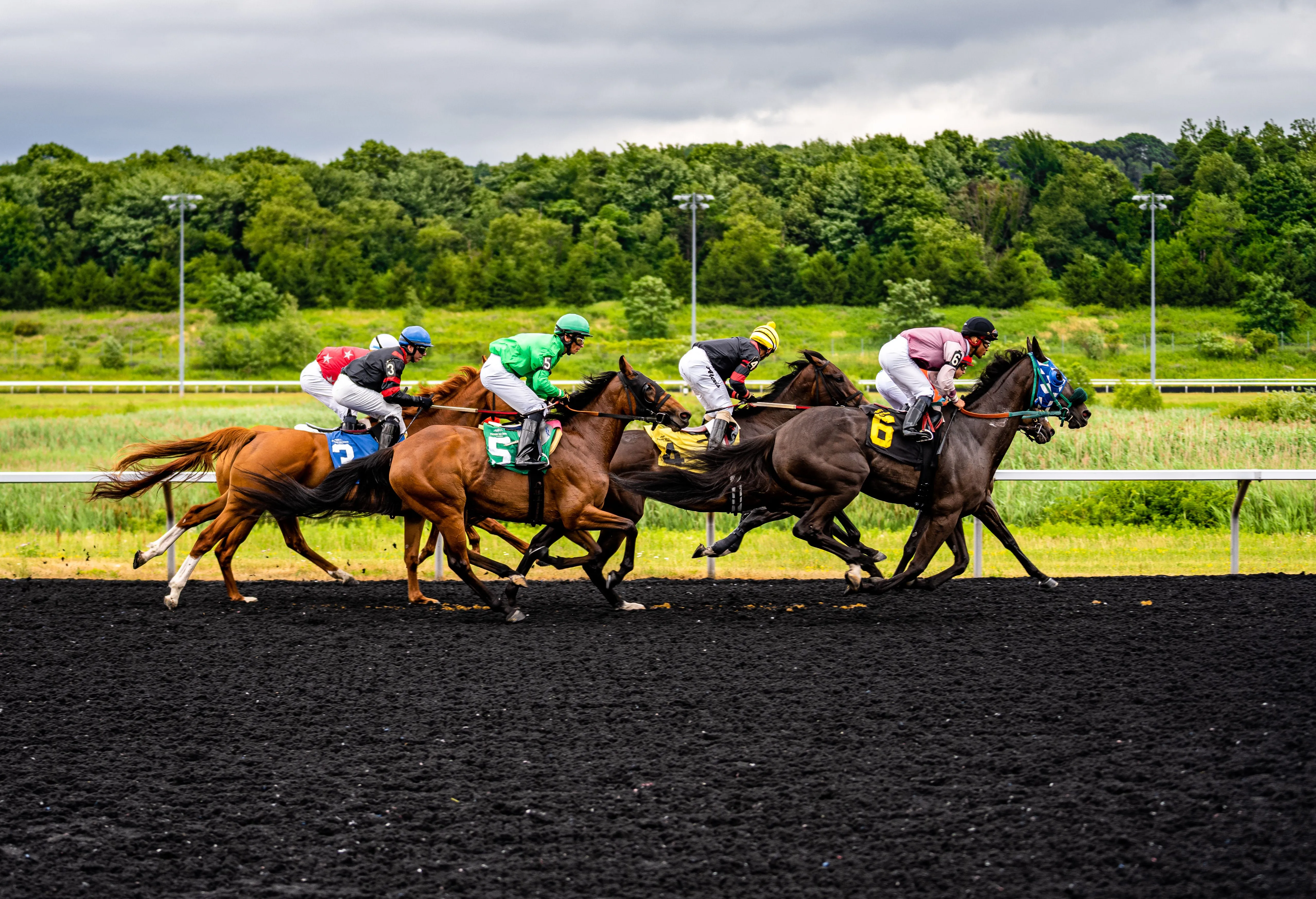
Most genetic studies on this topic have been conducted on Thoroughbreds, so let’s look at some of the genes associated with their performance.

  • The MSTN (Myostatin) gene, also known as the speed gene, is probably the most established performance gene in horses. It affects skeletal muscle growth and fibre composition, and it’s used to predict optimal racing distance. Horses with the C/C genotype are considered more suitable for short distances than horses homozygous for the T allele, which are predicted to be more successful over long distances. Find out more about this gene here!

  • The PDK4 gene encodes pyruvate dehydrogenase kinase, (isozyme 4), a mitochondrial enzyme associated with energy metabolism. A 2010 study describes a connection to handicap rating – individuals with A/A or A/G genotypes were found to have a 16.2- 16.6 lb (roughly just under 7.5 kg) handicap advantage over G/G horses.

  • The COX4I2 gene encodes cytochrome c oxidase (subunit 4, isoform 2), an important enzyme for the mitochondrial electron transport chain and thus an important enzyme for energy gain. A 2010 study found a weak but significant link between this gene and racing performance, with the T allele being favourable over the C allele.

These three genes are just a glimpse of what an equine genome may potentially hide regarding performance. If you want to know everything hidden in your horse’s genome, EquineTest might be just what you are looking for! Find out more about how it works here!
Ready to explore your horse’s DNA?

Start with a sample DNA report or order a whole genome DNA test for your horse.

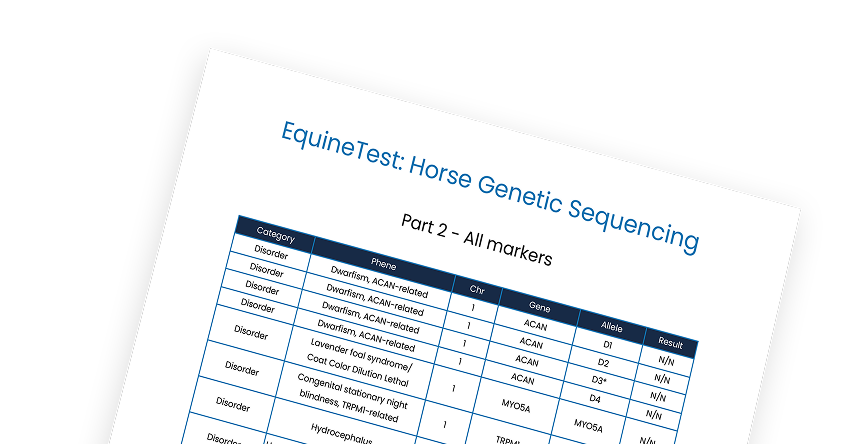
EquineTest horse genetic sequencing report with markers table
what’s new

Blog

pexels-luis-negron-260501657-13641980
Horses Health Diagnostics

Polygenic Score in Horses: Lessons from Racehorse Fractures

Can a polygenic score alter a horse's genetic makeup? Short answer: no. A polygenic score doesn't change a horse's DNA. It adds up the tiny effects of hundreds to thousands of genetic variants into a single number that estimates predisposition – a risk, not a diagnosis. Nowadays, scientists know that some of the complex conditions in horses are due to the combined effect of a number of variants rather than the result of a single faulty gene mutation, and one of the most interesting examples currently available is that of Thoroughbred racehorses.

Read more
pexels-julissapires-5424233
Horses

Genetic Regulation of Body Size in Horses - From Shetlands to Shires

There is considerable variation in height within the horse population. There are tiny ponies, which can be even smaller than some dog breeds, as well as large draught horses, whose height at the withers is often close to 2 metres. While height is to some extent affected by environmental factors, it’s also strongly influenced by genetics. There is not a single gene that determines how tall a horse will eventually become. Rather, the final height of a horse is a result of effects of multiple genes and other factors. Let’s take a look at some of them!

Read more
belova59-laboratory-3827738
DNA Diagnostics

Polygenic Score in Horses: When a Single Mutation is not Enough

Many people associate the term genetics with a simple and direct cause-and-effect relationship: one gene, one mutation, one trait. However, the genetic outcomes for many traits, such as performance, behavior, athleticism, disease susceptibility, and temperament, cannot be simplified in this way, as these traits are not defined by a single mutation but by hundreds to thousands of minor factors, each with its own tiny effect on the outcome. Individually, many of these variants have only a small effect, but when we look at them as a whole, they become more meaningful.

Read more
shire-horse-1751803_1280
Horses Coat Colour

White Markings and their Genetic Background

Across the animal kingdom, white markings are thought to be associated with domestication. They are typical for domesticated animals such as dogs, cats, pigs, cows, and horses, in contrast to their wild counterparts. White markings are caused by the absence of melanocytes (pigment-producing cells) in certain body areas, resulting in white hair.

Read more