
- Horses
- Health
- Coat Colour
- Cancer
1. 5. 2025
Genetic Aspects of Cancer in Horses
The three most common cancers in horses are sarcoids, squamous cell carcinomas and melanomas. All of these are suspected - or even confirmed - to be hereditary cancer syndromes.
Cancer is typically caused by the accumulation of errors - mutations - in DNA. As these mutations tend to build up with age, older horses are generally more susceptible to cancer. However, in certain cases, the risk of developing cancer can also be genetically determined. These instances are referred to as hereditary cancer syndromes, where a genetic predisposition to cancer is passed from parent to offspring. Horses with such inherited traits have a higher likelihood of developing cancer compared to those without this genetic risk.
Sarcoids are the most common type of cancer in horses. They are a form of skin cancer that can appear anywhere on the horse’s body, although some locations are more common than others. The main cause for sarcoids is believed to be bovine papillomavirus (BPV) infection; however, a genetic predisposition may also be at play, as certain groups of horses seem to be more susceptible than others.
The second most common type of cancer in horses is squamous cell carcinoma, which is also the most common cancer impacting the equine eye. The tumors primarily arise from the limbus, nictitating membrane, and upper or lower eyelids. It’s often found near the eyes, on unpigmented areas of the body, and in the anal and genital regions.
A genetic predisposition to developing squamous cell carcinomas around the eyes has been linked to a mutation in the DDB2 gene (damage-specific DNA-binding protein 2), whose main function is to repair UV-induced DNA damage. This mutation is inherited in an autosomal recessive pattern with incomplete penetrance - meaning a horse must inherit the mutation from both parents to be at increased risk of cancer growth, and even then, cancer may not necessarily develop as other factors, such as UV light exposure, also play a role. This causal risk factor was found in several breeds - Haflingers, Belgian Draughts, Belgian Warmbloods, Holsteiners, Rocky Mountain Horses and Connemaras.
Lastly, melanomas, cancers originating from melanocytes. Melanocytes are cells responsible for melanin production, providing pigmentation to skin, hair and eyes. Melanomas are often found under the tail, in the anal and genital area and on the eyelids, although they can also develop internally.
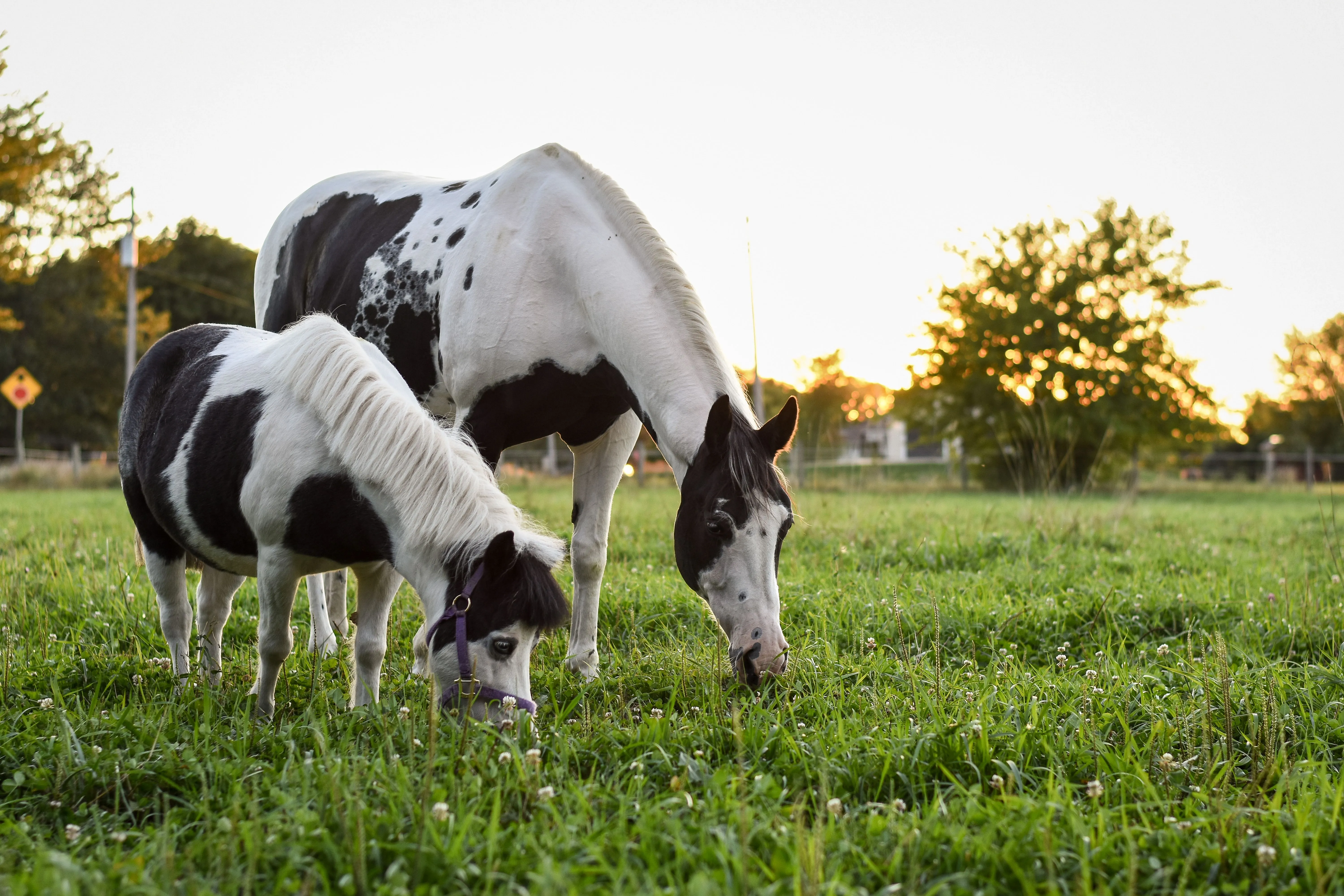
Up to 80% of grey horses over the age of 15 develop melanomas, whereas they are uncommon in different coloured horses. The grey coat colour is inherited in an autosomal dominant manner, meaning the horse has to inherit the version of the genetic variant only from one parent to be grey, and only a grey horse can produce grey offspring. This genetic variant - a mutation - is associated with the multiplication of the STX17 and NR4A3 genes. It speeds up the body’s production of melanocytes, which results in their early shortage and causes the horse’s coat to grey out with age.
The predisposition for melanocyte formation also depends on the number of copies of these genes. Horses with three copies of the STX17 and NR4A3 genes (G3) tend to grey out faster and are at a higher risk of developing melanomas than horses with only two copies (G2). However, a grey horse can also carry both variants (G2/G3), and in some cases may have up to six copies (G3/G3), further increasing the likelihood of melanoma development.
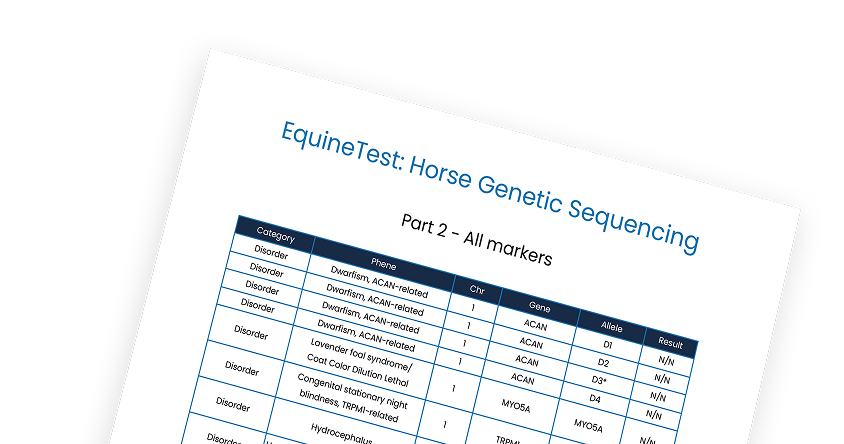
Whole genome sequencing can reveal whether your horse carries these inherited risk factors for cancer. It can also help determine whether a grey horse is homozygous for the grey mutation, which may be valuable information for your breeding decisions, as homozygous greys will always produce grey offspring. Moreover, whole genome sequencing holds the potential to identify currently unknown genetic risk factors, such as those that may be involved in sarcoid susceptibility.