

Competitions
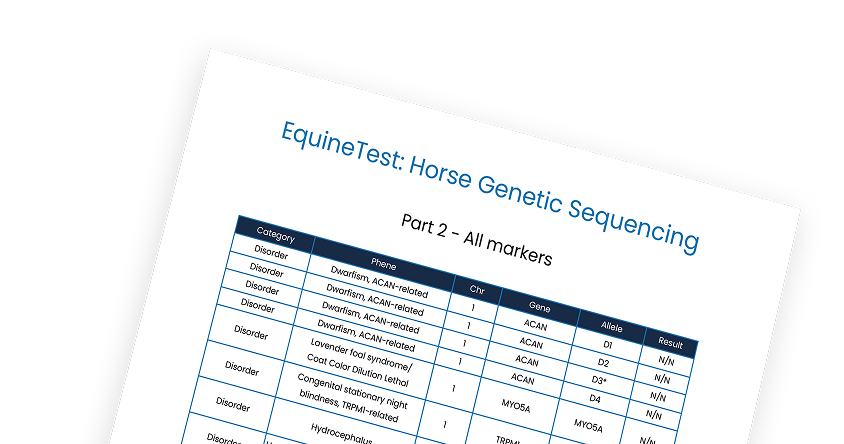
If you’re serious about equestrian competitions, maximizing your horse's performance is key. One of the most effective ways to gain a competitive edge is through EquineTest. This advanced genetic testing provides a comprehensive understanding of your horse's genetic makeup, allowing you to tailor training, care, and breeding strategies to unlock his or her full potential. Here’s why EquineTest is essential for you.
Tailored Training Programs: Every horse has a unique genetic blueprint that influences his or her physical capabilities, including speed, stamina, muscle composition, and recovery rates. Equinetest reveals specific genetic markers linked to these traits, allowing you to design a training regimen that plays to your horse’s strengths.
Injury Prevention and Management: Genetic insights can also identify potential vulnerabilities in your horse’s musculoskeletal system. Certain genes are associated with a higher risk of injuries like tendon strains or bone fractures. By understanding these risks, you can take preventive measures, such as adjusting training intensity or providing targeted nutritional support, to minimize the chance of injury. This proactive approach not only keeps your horse in peak condition but also reduces downtime from injuries, ensuring more consistent performance.
Performance Optimization: EquineTest can identify genetic factors that influence your horse's metabolic efficiency, oxygen utilization, and response to exercise. These insights are crucial for fine-tuning everything from diet to race-day strategy. For example, if your horse has a genetic predisposition for efficient oxygen usage, you might choose to focus on maximizing aerobic capacity during training. Understanding these nuances allows you to optimize every aspect of your horse’s preparation, ensuring it is primed for peak performance on the day of competition.
Informed Breeding for Future Champions: If you plan to breed your sport horse, EquineTest provides essential information for selecting the right breeding partners. By understanding the genetic factors that contribute to performance, you can choose mates that complement your horse’s strengths and minimize any weaknesses. This increases the likelihood of producing offspring with the desired traits for racing, ensuring that your breeding program consistently yields high-performing horses.
Long-Term Competitiveness: In the highly competitive world of horse racing, staying ahead of the curve is essential. Whole genome sequencing by EquineTest offers a scientific edge by providing insights that are not visible through traditional methods of evaluation. By leveraging this cutting-edge technology, you gain a deeper understanding of your horse’s genetic potential, enabling you to make more informed decisions that keep your horse at the top of its game throughout its racing career.
Precision Nutrition and Supplementation: Understanding your horse's genetic makeup also allows for the customization of its diet and supplementation. Certain genes influence how efficiently a horse metabolizes nutrients and responds to various supplements. With this knowledge, you can design a nutrition plan that supports optimal energy levels, muscle development, and recovery, giving your horse the fuel it needs to perform at its best.
In conclusion, EquineTest is an invaluable tool for any serious horse owner. It provides the detailed genetic insights needed to tailor every aspect of your horse’s training, care, and breeding, ensuring that your horse can reach its full potential on the track. Investing in EquineTest is not just about understanding your horse’s genetics—it’s about gaining a competitive edge that could be the difference between winning and losing.
Ready to explore your horse’s DNA?
Start with a sample DNA report or order a whole genome DNA test for your horse.
Blog
Genetic Regulation of Body Size in Horses - From Shetlands to Shires
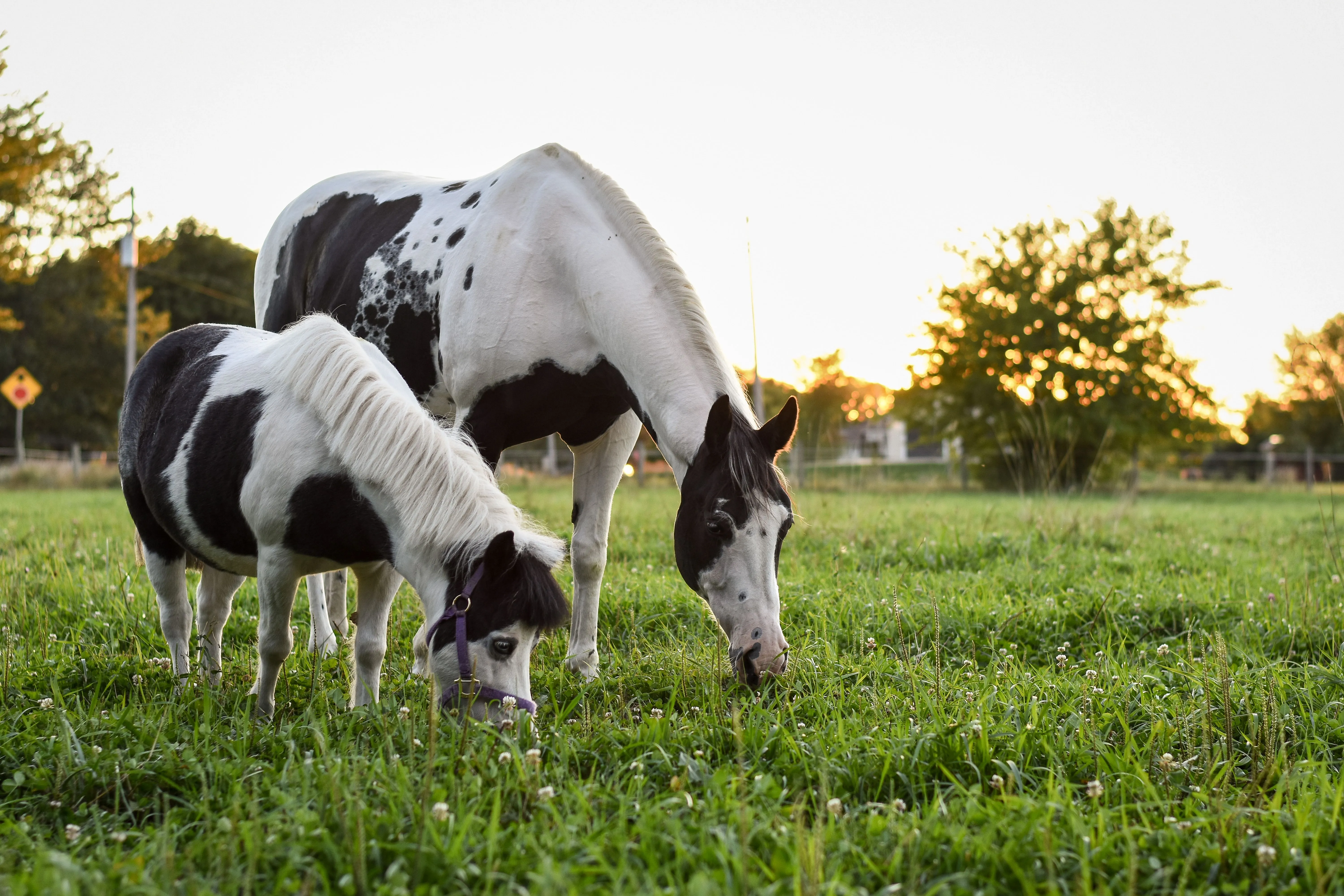
There is considerable variation in height within the horse population. There are tiny ponies, which can be even smaller than some dog breeds, as well as large draught horses, whose height at the withers is often close to 2 metres. While height is to some extent affected by environmental factors, it’s also strongly influenced by genetics. There is not a single gene that determines how tall a horse will eventually become. Rather, the final height of a horse is a result of effects of multiple genes and other factors. Let’s take a look at some of them!

Polygenic Score in Horses: When a Single Mutation is not Enough
Many people associate the term genetics with a simple and direct cause-and-effect relationship: one gene, one mutation, one trait. However, the genetic outcomes for many traits, such as performance, behavior, athleticism, disease susceptibility, and temperament, cannot be simplified in this way, as these traits are not defined by a single mutation but by hundreds to thousands of minor factors, each with its own tiny effect on the outcome. Individually, many of these variants have only a small effect, but when we look at them as a whole, they become more meaningful.
White Markings and their Genetic Background
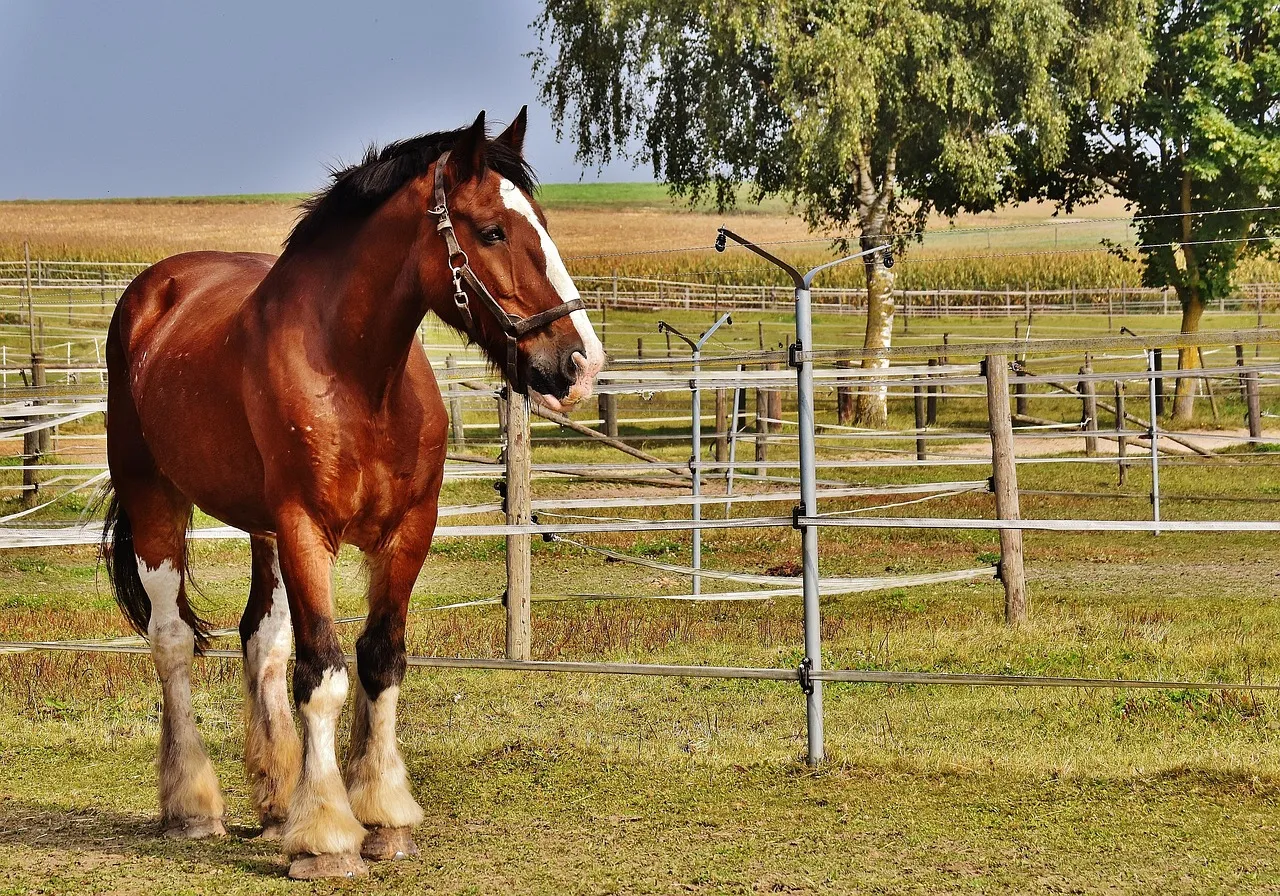
Across the animal kingdom, white markings are thought to be associated with domestication. They are typical for domesticated animals such as dogs, cats, pigs, cows, and horses, in contrast to their wild counterparts. White markings are caused by the absence of melanocytes (pigment-producing cells) in certain body areas, resulting in white hair.
Genetics of Ambling
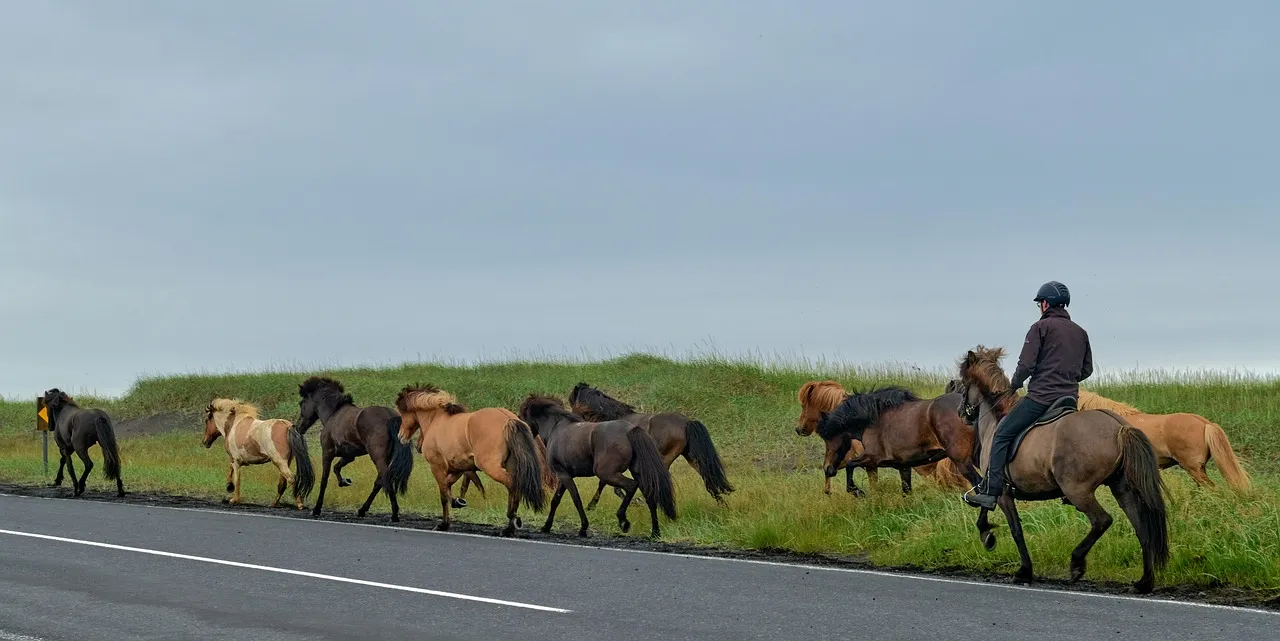
The three basic horse gaits are walk, trot, and canter. Gallop, sometimes considered to be the fourth basic gait, is practically a variant of canter. The main difference between these two gaits is that a canter is a three-beat gait, while a gallop is a faster four-beat gait that covers more ground.