- Horses
28. 8. 2024
Harnessing Horse DNA: Unleashing Peak Performance and Lifelong Health through Equine Genetic Insights
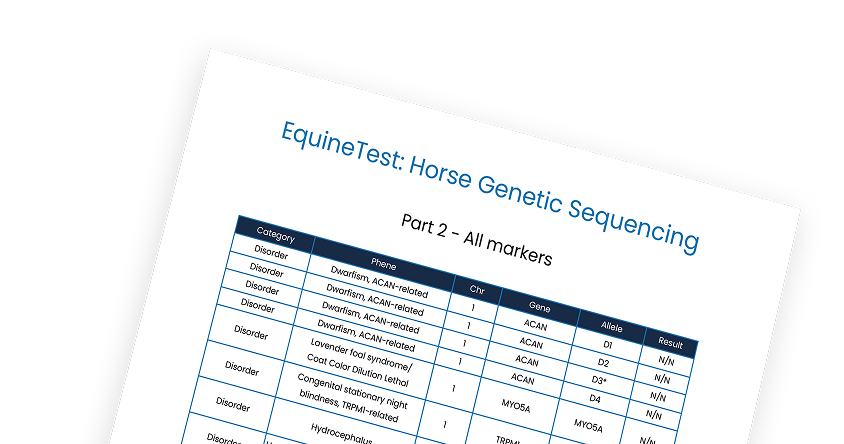
Understanding and leveraging DNA sequencing through EquineTest provides invaluable benefits for various stakeholders in the equine industry.
For sport horse owners, DNA sequencing is a tool to optimize your horse’s health and performance. By understanding the genetic predispositions of your horse, you can tailor their diet, exercise regimen, and even environmental conditions to mitigate risks and enhance strengths. For instance, if your horse has a genetic predisposition to a muscle condition, you can proactively adjust its training schedule and nutrition to manage and prevent flare-ups. This not only improves performance but also prolongs your horse’s career.
Veterinarians can also significantly benefit from this cutting-edge technology. DNA sequencing offers a deeper insight into the genetic factors influencing a horse’s health, allowing for more accurate diagnoses and personalized treatment plans. This is particularly useful in managing chronic conditions or when deciding on surgical interventions, where understanding genetic risks can guide more informed decisions.
Breeders, on the other hand, can use DNA sequencing to make informed choices about pairings, ensuring that they are not just breeding for performance but also for long-term health and resilience. For example, by identifying genetic markers associated with certain hereditary diseases, breeders can avoid pairing horses that might produce offspring with those conditions, thereby contributing to a healthier and more robust future generation.
In conclusion, EquineTest’s DNA sequencing is more than just a glimpse into your horse’s genetic blueprint; it’s a practical, actionable tool that can significantly impact the well-being, performance, and legacy of your equine partners. By making data-driven decisions, you can ensure that your horse not only reaches its full potential but does so in the healthiest way possible.
Michal Zwinger, EquineTest