- Horses
- Health
- Coat Colour
1. 11. 2025
Leopard Complex and Eye Health Issues
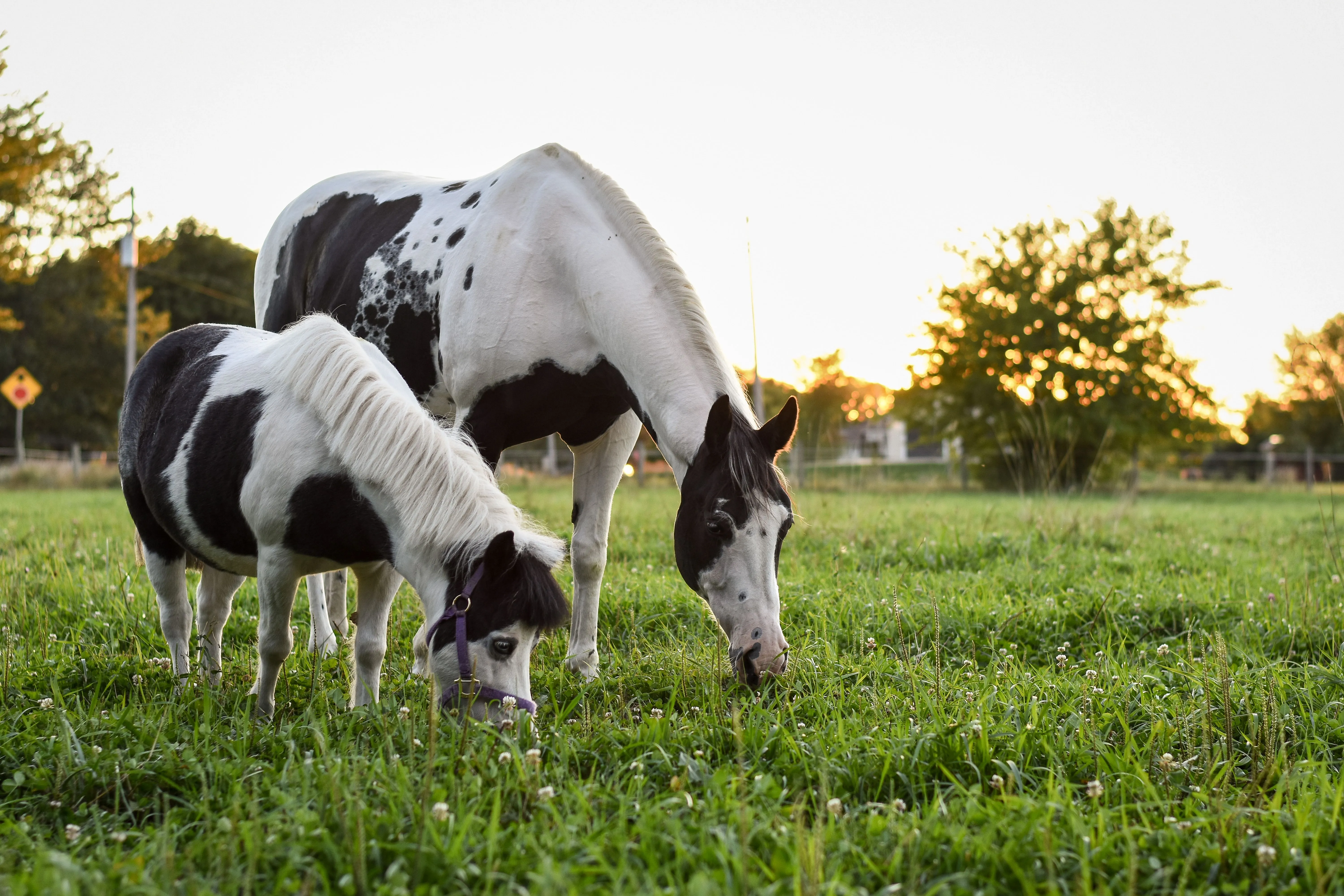
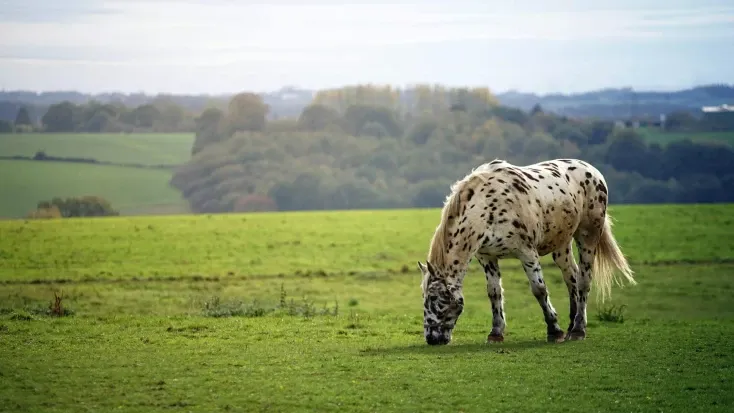
The leopard complex is a group of white spotting patterns, including the leopard, few-spot leopard, snowcap blanket, lace blanket, spotted blanket, varnish roan, snowflake, and frosted, speckled, and mottled patterns.
They are caused by a mutation in the TRPM1 gene, which is inherited in an incomplete dominant fashion. Other genes also affect the final appearance of the horse’s coat, mainly regarding the extent of white, as patterns of the leopard complex can range from just a few white spots on the rump to an almost entirely white coat. This colouring is probably most associated with Appaloosas, but it can also be found in other breeds, such as the Knapstrupper, Noriker, and American Miniature Horse.
The incomplete mode of inheritance means that the horses that are heterozygous in the TRPM1 gene (LP/lp) are of a different colour than horses carrying two copies of the mutation (LP/LP). Heterozygous horses have typical spotting within the white areas of their body, while horses homozygous for the mutation (LP/LP) generally show little to no visible spotting.
Sadly, the mutation responsible for the white spotting is also connected to eye health issues, the first one being Congenital Stationary Night Blindness (CSNB). As the name suggests, it’s a congenital non-progressive disorder, affecting only horses with two copies of the mutation (LP/LP). Affected horses appear to be able to see normally during daylight, but struggle with orientation in low-light conditions. It’s necessary to mention that most studies linking the TRPM1 mutation to CSNB have been conducted on Appaloosas, and it is likely that this single disease may be caused by different mutations across the horse population. It should be considered that CSNB may arise from mutations in genes other than TRPM1, with GRM6 also implicated in this condition.
Another eye health issue linked to the leopard complex is Equine Recurrent Uveitis (ERU), also known as moon blindness. ERU is the most common cause of blindness in horses with a complex and multifactorial origin. It’s an autoimmune disease associated with genetic and environmental factors, as well as with Leptospiral infection. A study in the Appaloosa horse population found that LP/LP horses were at a greater risk for ERU, and the manifestation and severity of the disease were more significant compared to horses with just one copy of the mutation. LP/lp horses were found not to be at a significant risk for ERU compared to horses not carrying the mutation for the leopard complex (lp/lp). However, because ERU results from multiple interacting factors, the presence of the leopard complex mutation alone is not sufficient to predict disease, although future research may improve the ability of genetic testing to contribute to early detection and risk assessment.
The genetics behind leopard complex patterns inevitably involve health risks that need to be taken into consideration regarding breeding white spotted horses. Whole genome sequencing may offer you an interesting point of view, not only to potentially identify the TRPM1 mutation, but also to identify other genetic variants that may affect both coat colour and health of your horse. Your horse’s genome may even become an important piece of a puzzle for better understanding genetic aspects of eye health in horses, as mutations behind CSNB are not yet fully understood! Through community efforts, we can advance our knowledge of genetic causes of different equine disorders – everyone who has their horse WGS done contributes to uncovering the causes of not only CSNB, but also every disease waiting to be described!