

Data Reanalysis Once a Year
It can be said that sequencing is done in a few days, but data analysis is never completely finished.
As we all know, every horse, like every person, is different. But all horses have - speaking roughly - "the same amount of same DNA". Yet still all the observed variability of individual animals is encoded in it. Of course, there are differences between them due to e.g. training etc., but the inherent variability is given at the DNA level.
As progress in the knowledge of the equine genome is rapid, but for obvious reasons not as rapid as for example in humans, it is quite clear that it will be a long time before the equine genome is truly well understood and described, with fine details and nuances not definitively known probably never. This is due to the fact that all living organisms are constantly evolving, adapting to environmental changes, and selection is taking place among them, as a result of which even their DNA changes from generation to generation in the long term.
From the perspective of an owner who is interested in the genetic background of a particular horse or horses, it is a great advantage to have a whole genome sequence available. Of course, you can have a single genetic marker examined that you need to know at the moment, but we are quite sure that next month or year you may be interested in a completely different marker. This means another sampling and another examination.
Once fully sequenced by Equinetest, the DNA sequence can be saved and returned to at any time. If you have your entire genome sequenced once, you will no longer need any further examination at the DNA level. We will simply take your horse's genome sequence anytime in the future and find in it anything new that you will be interested in, or that the experts will discover by then.
Ready to explore your horse’s DNA?
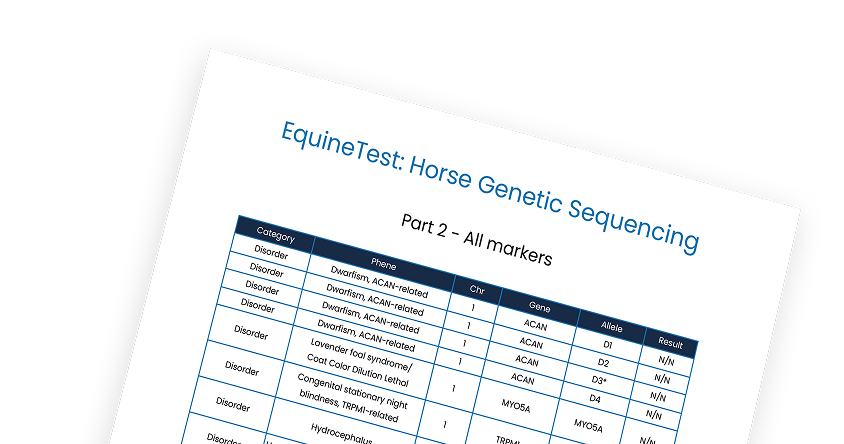
Start with a sample DNA report or order a whole genome DNA test for your horse.
Blog
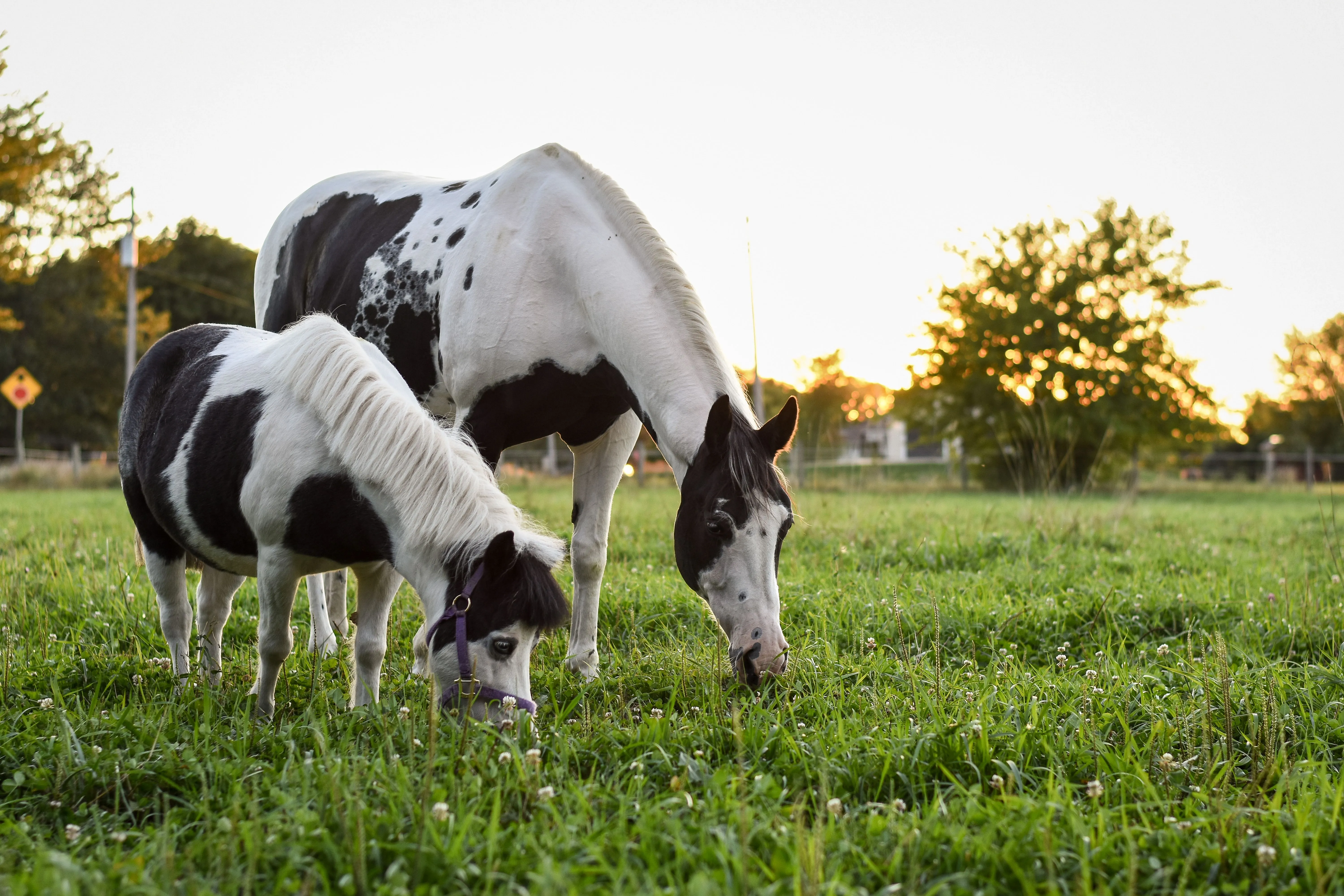
Genetic Regulation of Body Size in Horses - From Shetlands to Shires
There is considerable variation in height within the horse population. There are tiny ponies, which can be even smaller than some dog breeds, as well as large draught horses, whose height at the withers is often close to 2 metres. While height is to some extent affected by environmental factors, it’s also strongly influenced by genetics. There is not a single gene that determines how tall a horse will eventually become. Rather, the final height of a horse is a result of effects of multiple genes and other factors. Let’s take a look at some of them!

Polygenic Score in Horses: When a Single Mutation is not Enough
Many people associate the term genetics with a simple and direct cause-and-effect relationship: one gene, one mutation, one trait. However, the genetic outcomes for many traits, such as performance, behavior, athleticism, disease susceptibility, and temperament, cannot be simplified in this way, as these traits are not defined by a single mutation but by hundreds to thousands of minor factors, each with its own tiny effect on the outcome. Individually, many of these variants have only a small effect, but when we look at them as a whole, they become more meaningful.
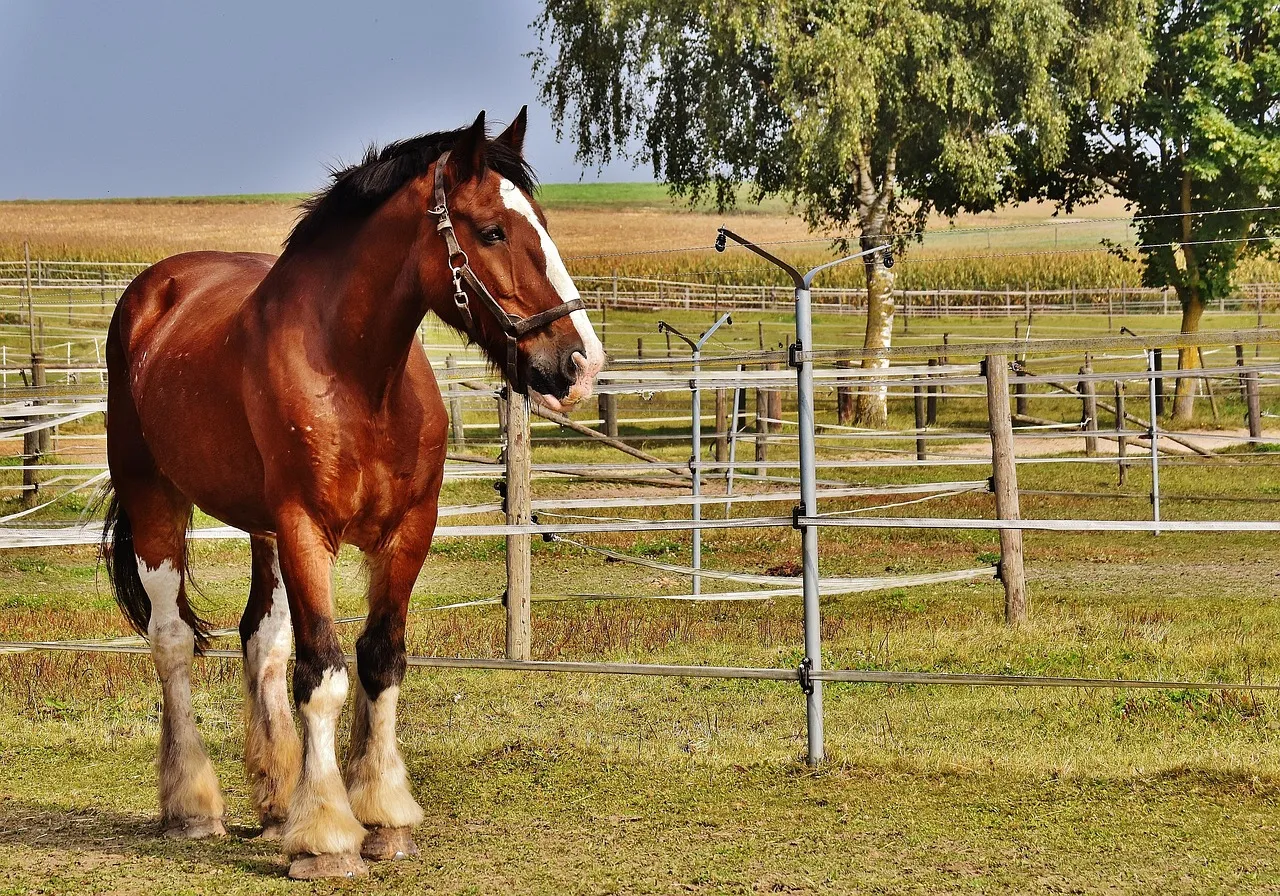
White Markings and their Genetic Background
Across the animal kingdom, white markings are thought to be associated with domestication. They are typical for domesticated animals such as dogs, cats, pigs, cows, and horses, in contrast to their wild counterparts. White markings are caused by the absence of melanocytes (pigment-producing cells) in certain body areas, resulting in white hair.
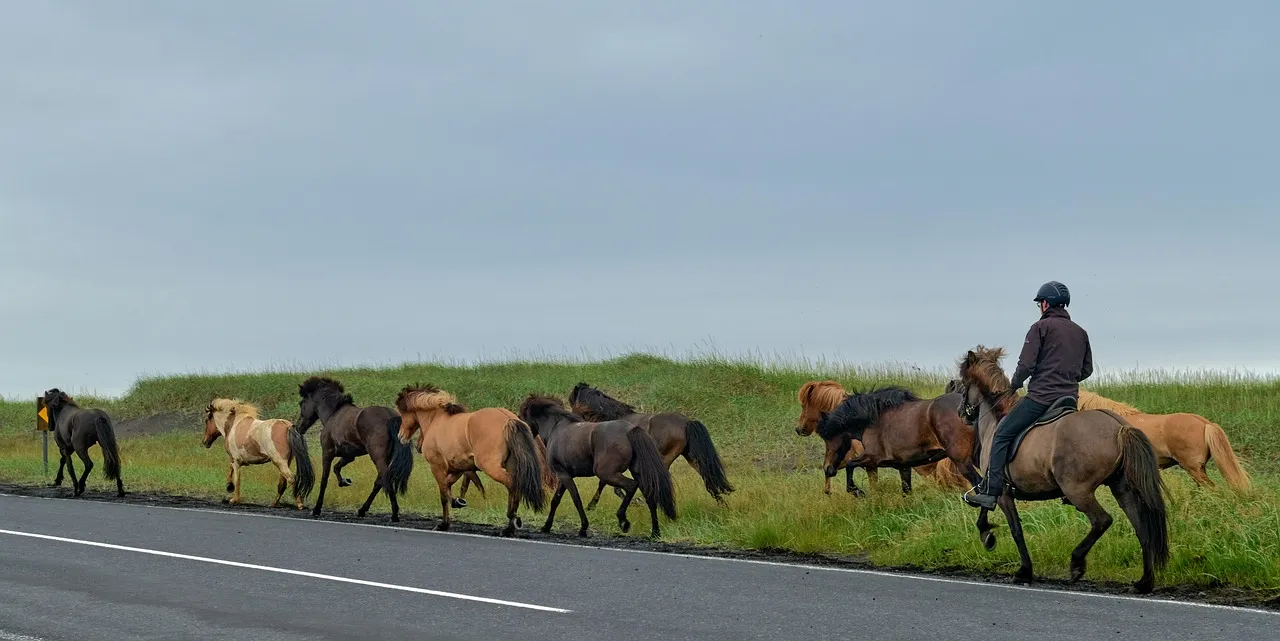
Genetics of Ambling
The three basic horse gaits are walk, trot, and canter. Gallop, sometimes considered to be the fourth basic gait, is practically a variant of canter. The main difference between these two gaits is that a canter is a three-beat gait, while a gallop is a faster four-beat gait that covers more ground.